

Microgrid.
Grid-connected, islandable or fully off-grid. The platform models the combined behaviour of generation, storage and load, including the system response at the moment of grid disconnection.
Load characteristics
In a microgrid, resilience is the primary requirement. The system is evaluated less on average cost than on its performance during the most adverse week of the year, so the twin must be run over a horizon long enough to capture that week.
- Islanding and reconnection behaviour, not just steady-state energy balance
- Autonomy measured in hours or days of critical load without generation
- Seasonal asymmetry; a system sized on annual averages fails in the most adverse month
- Mixed ownership and mixed load types on one bus
- Remote sites where fuel logistics and maintenance access are the governing constraints
- Backup generation retained in the design and dispatched only when the twin indicates that it is required
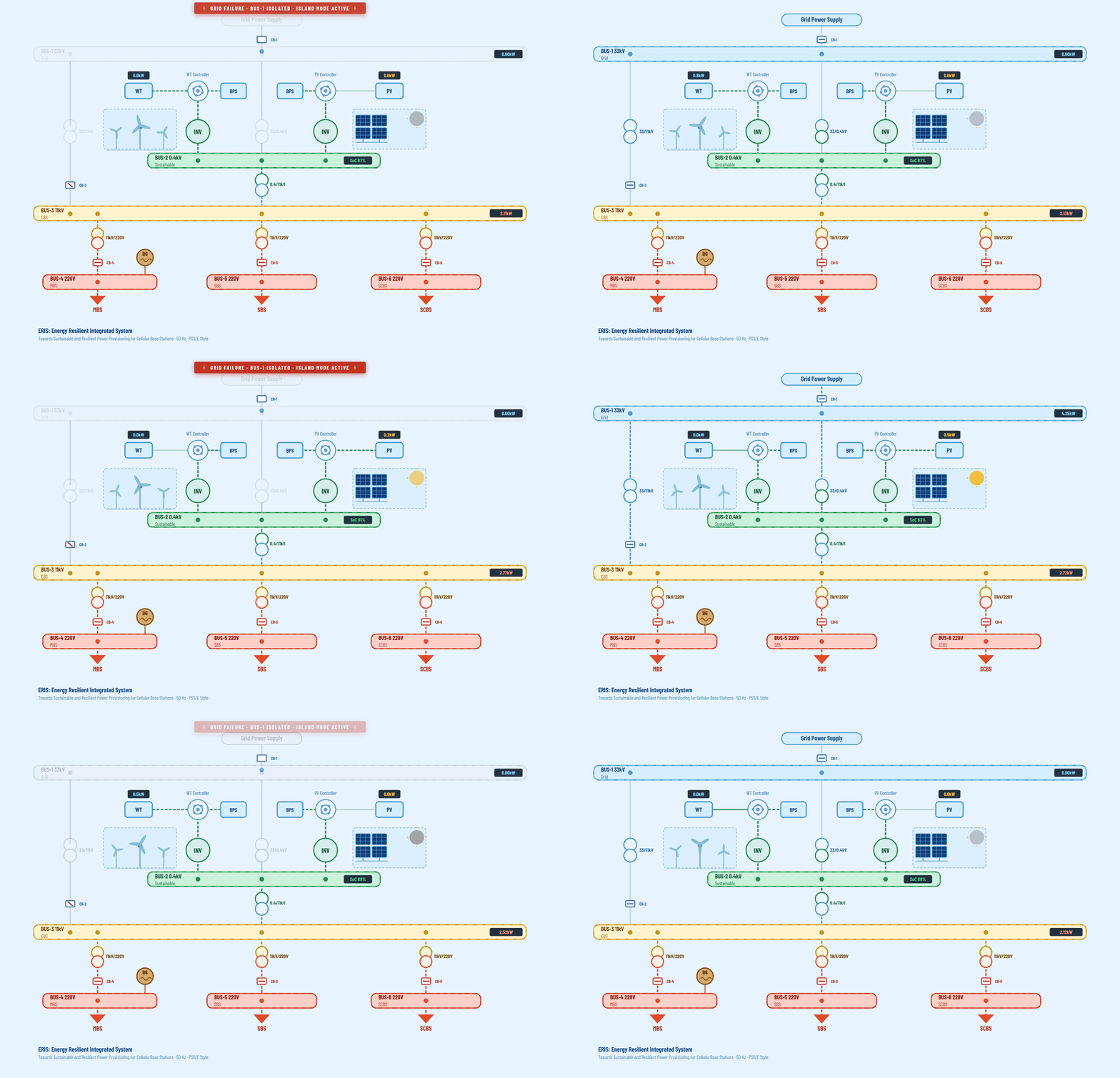
Sizing and islanding test
A highland community site in Tasmania on live resource data — a 1.8 MW solar array, a 900 kW wind cluster and a 6 MWh battery against a 1 MW load. Adjust any component size, then press Grid connected to island the system and observe the resilience that the selected sizing provides.
Engine configuration for this application area
Standards and criteria applied
- Wiring rules and protection coordination for the distribution network
- Grid connection of inverter energy systems, including anti-islanding and reconnection requirements
- PV array installation and DC-side safety, and wind turbine design and power-performance measurement
- Battery energy storage installation and safety
- Generating-set requirements for standby and prime-power backup
- Substation and device communication protocols where SCADA integration is in scope
The applicable set is confirmed at kick-off and depends on jurisdiction, connection point and the reliability target agreed with you.
Apply the platform to your site.
Provide a site location and a load profile, and we will return a sized system and a performance trajectory over the agreed study horizon.
Request a demonstration →