

Data centre.
A continuous critical load that cannot be shed, sized against on-site renewables and storage, and validated over a multi-year horizon before any equipment is procured.
Load characteristics
A data centre load is large, flat and highly critical. It offers no load diversity and tolerates no interruption; the design question is therefore not the quantity of energy required, but the firm capacity needed, at what confidence level and for what duration.
- Continuous 24/7 critical load with negligible diversity between racks
- Redundancy expressed as a tier rather than a percentage; N+1 and 2N topologies change the sizing problem fundamentally
- PUE and cooling load that move with ambient temperature, so the load series is weather-coupled too
- Multi-year IT growth ramps, requiring the system to remain feasible from the first to the final year of the study horizon
- Grid connection capacity and export limits that constrain how much renewable generation is worth installing
- Demand charges and network tariffs large enough to change the optimal storage duration
Live digital twin
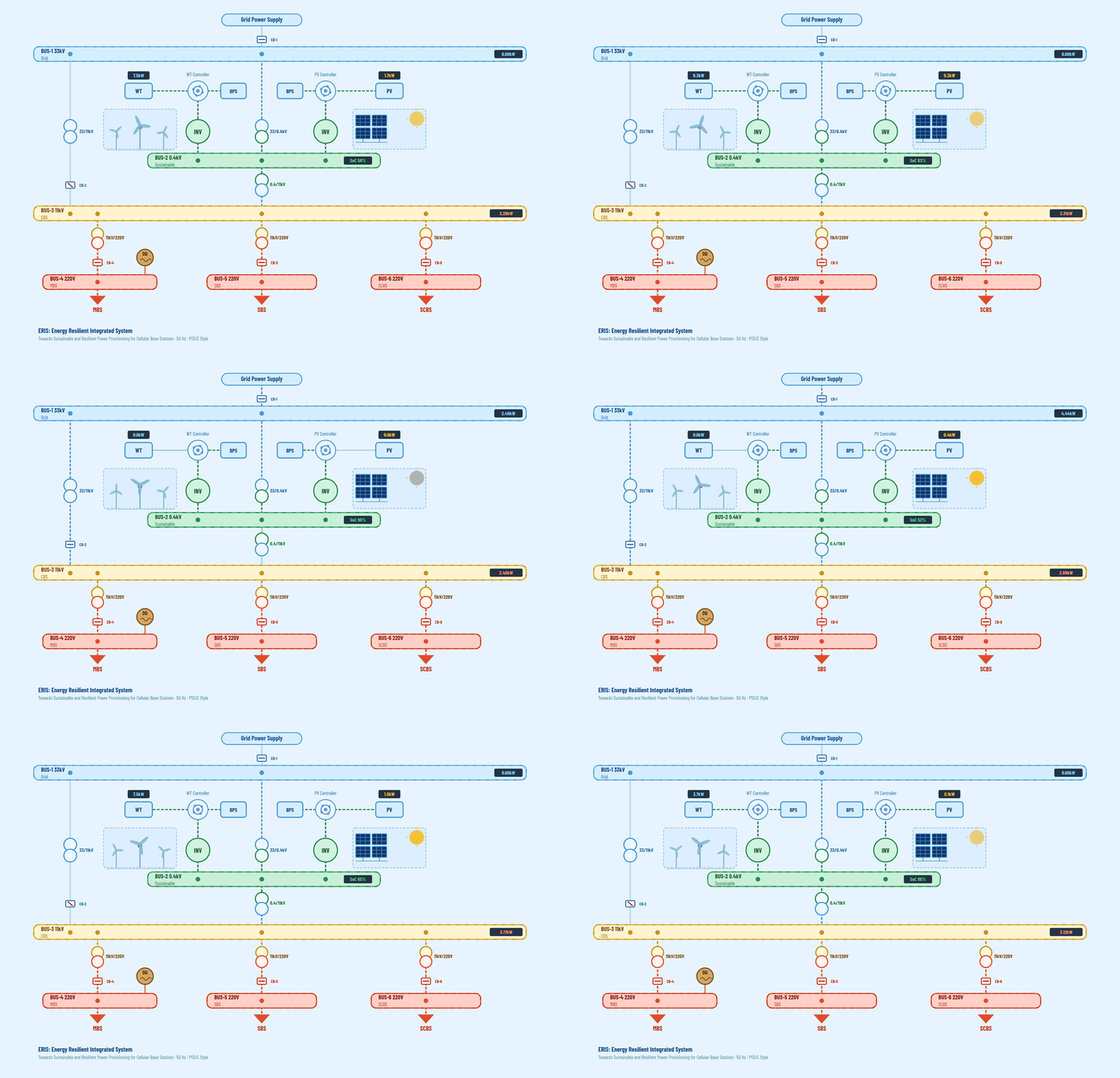
Live irradiance, temperature and wind for Western Sydney driving a 60 MW solar array and a 40 MW wind cluster against a 50 MW data-centre load, with a 200 MWh battery dispatched between them. In a full study, the same model is run over the agreed horizon, typically 5 to 20 years; here it is shown across three days.
Engine configuration for this application area
Standards and criteria applied
- Data-centre infrastructure and redundancy tier classification
- Wiring rules, switchgear and controlgear assemblies, and protection coordination for the distribution system
- Grid connection of inverter energy systems, and PV array installation and DC-side safety
- Battery energy storage installation, safety and fire separation
- Standby generating-set requirements where diesel or gas backup remains in the design
- Reliability assessment methods for industrial and commercial power systems
The applicable set is confirmed at kick-off and depends on jurisdiction, connection point and the reliability target agreed with you.
Apply the platform to your site.
Provide a site location and a load profile, and we will return a sized system and a performance trajectory over the agreed study horizon.
Request a demonstration →